Economic Playbook 5: Infrastructure and Responsibility
Sarah looked at her diary over breakfast. She was not looking forward to the morning.
She buttered her toast and made herself a single espresso. Her GP had recently diagnosed hypertension and asked whether stress might be contributing. Sarah had almost laughed at the question. But she knew the doctor had a point. The pressures of work were beginning to affect her health, so the espresso was her only caffeinated drink of the day; she couldn’t possibly live a life without a coffee hit in the morning.
Her daughter, Chloe, had already left for college without saying goodbye. Sarah had missed the morning chat they would normally have. Even an argument would be nice this morning; at least it was a connection. Chloe was becoming more aware of the environment, joining the ABC environmental group and recently taking up a position as its media lead.
When Sarah had joined Chloe at the beach clean-up a few weeks earlier, she had hoped they might spend some quality time together. Instead, they had argued about who was responsible for the pollution. Her daughter blamed the water companies. Sarah had tried to explain that the problems were more complicated than that.
Chloe had taken pictures for the ABC Instagram campaign page, but Sarah had asked not to be identified. She had tried to explain that any images of her cleaning up could lead to her being accused of using the event as a publicity exercise. The argument had gotten heated, with Chloe saying Sarah was just a typical corporate leader. Now Chloe was not speaking to Sarah.
Sarah went back to her morning diary. The headline for the day was a meeting with the principal investors in Manor Farm Utilities. This would undoubtedly turn into another difficult morning for Sarah, Sapphire's investment director, the company chair and the chief financial officer. The agenda was entitled Financing the Next Phase of Growth.
Sarah thought it a curious description of a company struggling to service its existing debts.
Sarah remembered her ambitious plans for MFU when she joined them. She wanted to reduce water losses, develop new approaches to water conservation and rebuild the company's engineering and design capabilities. But those ambitions required time and investment.
Instead, almost every meeting concerned debt, refinancing and the growing possibility of government intervention.
She finished her coffee and closed the diary. There was little point in putting it off.
She didn’t live too far from MFU head office and enjoyed the drive. She arrived with time to spare so that she could read emails, have herbal tea and relax a little ahead of a day that was likely to be difficult.
She went through the emails. Most could be deleted, and she replied to some with her customary, ‘Thank you, I have received your email, and I will respond in the next seven days.’ There was one from Caroline Davis, the Environment Secretary. She really didn’t want to open that one, so she saved it until after the meeting.
The meeting was as she predicted: panicking investors and the chief financial officer trying to negotiate restructuring of the enormous debt. There was no time to talk about opportunities for growth.

“We're being asked to extend our exposure for another five years,” said the representative from the pension fund. “What assurance can you give us that we'll recover the money?”
“We cannot provide guarantees. The customers are not going anywhere, and they will continue to pay the bills. But we cannot raise the bills to enable us to recover faster and repay our debts. So we would appreciate your patience. We believe that if you stay with us, in the longer term we can provide a steady income stream.”
“But you say you need further investment. So you're asking us to lend more money to protect the money we've already lent.”
Sarah looked towards the CFO.
“We are partnering with government to enable us to have access to further funds. This will allow us to comply with the regulator without drowning in further debt. We believe we can deliver future services that satisfy our customers and the regulator. We believe that you will see continuing returns for at least the next ten years if you stay with us.”
Sarah outlined where the new funding was going and how this would enable MFU to comply with regulatory requirements and should see a reduction in fines for pollution incidents. They were looking to partner with other water companies to share facilities where they shared a common boundary and the costs of delivering waste were manageable.
Some creditors appeared willing to extend the terms of their loans. One investment fund holder was simply sticking to the original terms of the credit it had provided.
Sarah knew someone senior in that fund, and she knew she would have to spend time convincing them that the best way to secure a return was to loosen their hold.
This was not the job Sarah had imagined when she took up the role of CEO managing a large water company. But she was good at relationship building, and that was what MFU needed as it looked at something close to bankruptcy.
Sarah had met recently with the engineering team. They had shown her plans for grey-water retrieval projects that they suggested would reduce water consumption. They wanted permission to develop a pilot study. They had found a new housing development and a developer willing to explore environmental efforts to reduce water usage and improve water capture. They were simply asking for money to test the value of the project.
Sarah said she loved the project and would come back to them before the end of the week. But it was now the following week, and opportunities for design and development were solutions on the horizon that she couldn’t even imagine reaching any time soon. How could they not grow? Sarah felt a commitment to the engineering team.
Sarah reflected on her original ambitions for MFU when she joined and where she was now. She sighed deeply and returned to her desk.
Going over all her recent emails, Sarah remembered the one from Caroline Davis. She opened it and expected another telling-off from the Environment Secretary, but instead it was a request to meet with her to discuss what she knew of Astonia’s ageing infrastructure. Caroline wanted to discuss some thoughts the department was considering around building infrastructure for the future.
Sarah pondered on what that could mean and asked her secretary to arrange the meeting with Caroline.
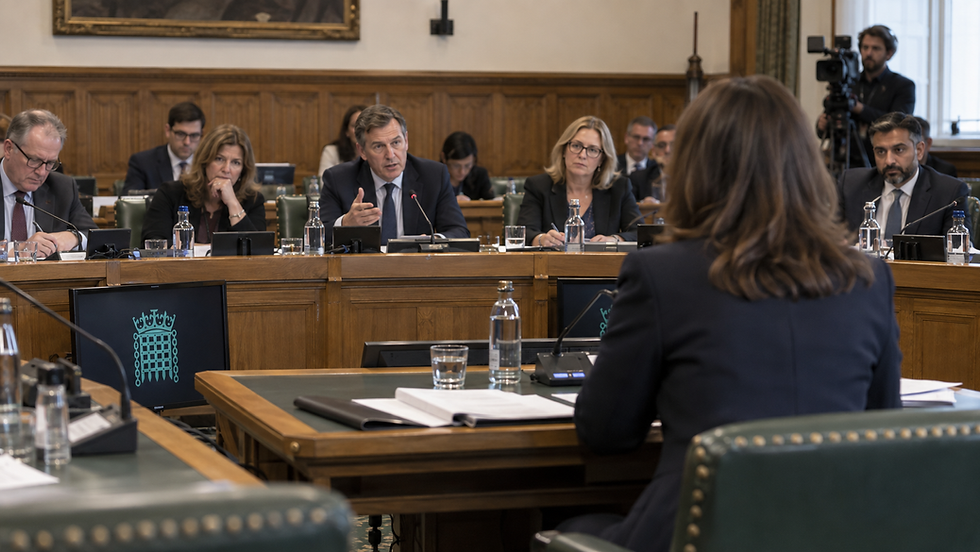
A few days later, Sarah was heading to the House of Commons.
Sarah had been instructed to arrive at the Cromwell Green entrance thirty minutes before her appointment. She joined a short queue of visitors. Her invitation was checked before she entered the security area.
She removed her coat and placed her handbag in a tray. After passing through security screening, she was given a visitor pass on a lanyard.
A young man was waiting for her beyond the reception area. “Ms Platt? The Secretary of State is expecting you.”
Sarah followed him into Westminster Hall. She looked upwards at the enormous timber roof, in contrast to the standard office lighting in the MFU office.
The assistant led her towards the meeting room. “The minister is just finishing a meeting with the Prime Minister; she will be out soon.”
Sarah had a brief view of the workings of Parliament and, whilst she had never considered working in a government department, she could see the attraction.
Sarah walked into Caroline’s office and thanked her assistant.
Caroline had a Nespresso machine on a shelf behind her desk and asked Sarah if she’d like a coffee. Sarah agreed. Over the next hour, Caroline talked to Sarah about Astonia’s ageing infrastructure: not just water, but power generation, gas storage and distribution, the railways and roads, and even telephone networks.
These systems were critical for Astonia. The country needed infrastructure improvements if it was to compete with other countries in advances in science and industry. But right now, Astonia was being held back by many elements of infrastructure that were coming towards the end of their useful life.
The government recognised that even large commercial organisations could not find the capital to invest in, upgrade and modernise these ageing systems.
Many commercial companies were also divided into geographical structures that simply didn’t work in a modern, outward-looking country. Astonia needed a mechanism to strengthen the architecture of the country, outside investment companies based within Astonia.
“We want to build a small commission with responsibility for looking at Astonia’s infrastructure, with a view to how to fund modernisation. We're proposing six or seven people initially, with access to specialist advisers. It won't own anything or build anything. Its job will be to identify the infrastructure the country needs over the next fifty years, without being constrained by the boundaries of existing companies.
“We do not even have a name for it yet, and I don’t have the power to give you a role in it, but I would like you to think about it. The closing date is at the end of next month. MFU has challenges ahead supplying water and reducing pollution, but the government recognises that the costs of infrastructure development are not small, and large capital investment projects are being stalled whilst financial restructuring enables the company to survive. What if the government built waste-treatment facilities and the companies rented them? That would provide you with fixed, predictable costs.”
“You're proposing that the government takes on the cost of infrastructure development, instead of the water companies?”
“Not necessarily. We could establish an independent infrastructure authority.”
“But somebody still has to borrow the money.”
“Yes.”
“And somebody has to repay it.”
Caroline smiled. “You're beginning to sound like the Treasury. But governments can sometimes find borrowing money to build infrastructure easier than commercial organisations. I am not saying anything is easy when it comes to asking for several billion pounds to build a waste-treatment facility. But it might be politically expedient rather than going through the cycle of nationalisation and privatisation that has dogged previous decades of changing governments, with each government blaming the others’ ideology for the current mess.”
“Governments should more often offer the public apologies for the mess created and not shift the blame to someone else. But you did not hear that from me.”
Caroline could offer no definite terms and was negotiating with the Treasury what the country could and could not afford to take responsibility for. The Treasury was relieved they were moving away from nationalising the water network; that would be a serious financial headache they did not want now.
Caroline acknowledged that plans by a government today could be thrown out by a different government tomorrow, but she felt that a committed focus on Astonia’s infrastructure and the risks it currently presented could not afford to be ignored by this or any other government.
Sarah thanked Caroline for the coffee and for a conversation that was not firefighting. Caroline called her assistant to escort Sarah out of Parliament.
It was dusk again, and Sarah found herself on a bench overlooking the Thames. She watched the water flow along with the river traffic and rang Chloe to say she would be a little late, but they could order pizza when she got in.
She was surprised that her daughter appeared cheery this time, and Chloe said she could collect her from the station when she got in.
Sarah reflected that children can be difficult, but you keep loving them regardless.
The train arrived on time, but by now it was dark. Sarah saw a message from Chloe that she was just outside. Sarah threw her bag in the back of the car, and they drove the few miles to the house, chatting about her day.
It was nice for Sarah to see Chloe relaxed and happy. They were even able to laugh about the previous beach clean-up.
Over dinner, pizza and ice cream, Chloe started to talk about decisions she was being expected to make.
“We had an argument at an ABC meeting yesterday,” Chloe said.

“What happened?”
“Marcus is a new member and he is very loud; he wants ABC to become a political movement. Not just pollution and beaches. Everything: education, housing, welfare, social justice.”
“He said that we can spend every weekend picking rubbish off the beach, but unless we change the decisions that put it there, we'll be doing this for the next fifty years.”
“And Helen?”
“She thinks we're losing sight of why we started. Politics always becomes about compromise and what is expedient. She didn’t start the beach clean-up campaign so that things could be watered down when other issues took precedence. She has seen other movements try developing themselves as a political force and it always meant compromise. She wanted to remain a thorn in the government’s side, not a political partner.”
Chloe pushed the remains of her pizza around the plate. “I don't know. Marcus has some good ideas. But I joined ABC because I wanted to do something about the beaches. I didn't join a political party.”
Sarah considered telling her about Caroline's invitation. Instead, she asked, “What do you think would change if ABC became a political party?”
“Honestly, I am conflicted. I really like Helen and Marcus is difficult, but he has a point. It is difficult to fix a system if you are on the outside. We need a voice within government that is listened to. But Helen has seen the compromises that are made when you are in government and the lobbying by commercial organisations, and she didn’t want to lose control of the dialogue. It would be better if we could do both: be a voice for clean beaches and advocate within government.”
“In any case, I have always liked Helen and looked up to her. If I sided with Marcus now, I would feel that I was letting Helen down.”
The conversation continued over ice cream, but Caroline’s discussion with Sarah was still running around Sarah’s head. She had never considered working for government. Sarah had dedicated much of her life to the corporate world, always believing they could achieve things, but recent tensions within MFU and the constant fights over financing and debt were draining.
Maybe a government role wouldn’t be so bad, and she liked the idea of running a small think tank. Maybe in government she could make a difference?
Sarah listened as Chloe described the arguments at ABC. She recognised more of the conversation than she cared to admit. Sarah wanted to talk to Chloe about her own life challenges, but she recognised that it was time for Chloe to do all the talking, and in any case, it was better than silence.
Chloe said she was going to bed to think about the issue. She enjoyed the fun of making Instagram pictures and videos and had never intended to become a politician. Sarah asked if she could see her Instagram page. Chloe delighted by her mother’s interest in her work and sent her the link.
Sarah took her glass of wine to the couch and spent the next half hour scrolling through Chloe’s photographs and videos. She had to admit that she was surprised how good they were, and she even wished her own media department could do things like this.
But it was now late and she decided to go to bed. Perhaps, after sleeping, she would know what to do with her career: stick with MFU or try something different. At least for now, her relationship with Chloe was one less battle she had to face.



Comments